In 1974 under the Equal Credit Opportunity Act women gained the opportunity to open a bank account under their own name without the permission of a man. Women, being the typical homemaker, have been the main consumer in America for generations. They make up around 80% of the buyers in all categories.
They are the ones who buy the groceries, the cleaning products, the clothes, the non-necessities, and the toiletries. Given this information, we can come to understand why companies chose to upcharge women for their toiletries.
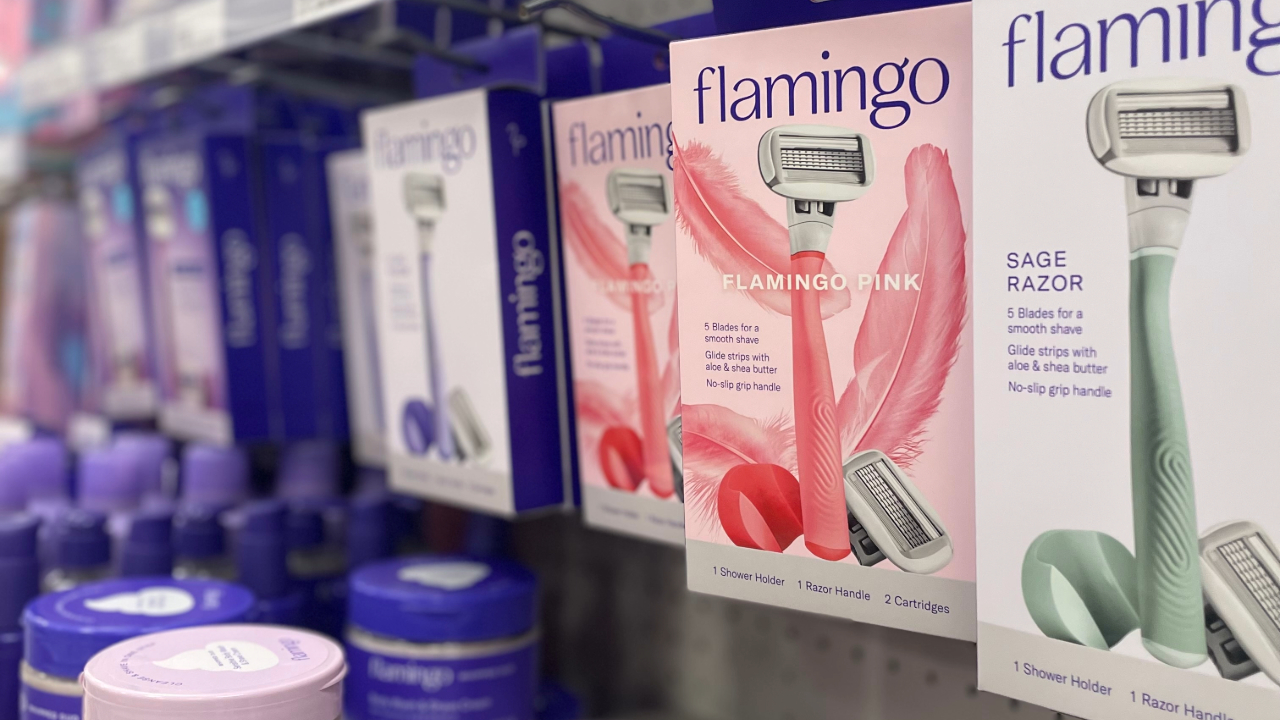
The Pink Tax is a recurring trend recently coined by online netizens. The working definition is that women or people who are feminine presenting have to pay more for certain toiletries due to gender based marketing. This issue has most recently come about in the last 10 years with a focus on gender and racial inequality.
This marketing is even more noticeable in current times with inflation, while wages remain stagnant. The minimum wage in California is $16.90/hr. If someone were to work 40 hours a week they would be making roughly $670 weekly, this is without taking away taxes and other finances included in a typical paycheck.
The groups that the Pink Tax would most impact are older women, younger women, college aged women, and women of all races and sexualities.
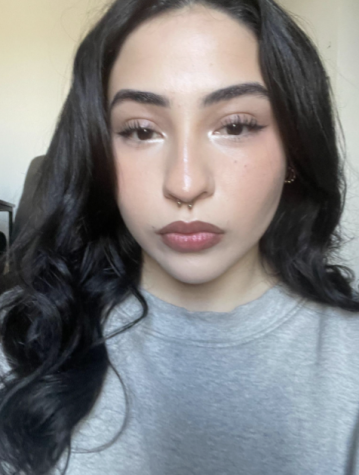
I went about asking three different college students, both male and female, about their monthly spending on toiletries, their opinion on the Pink Tax, and their hopes for the future. I asked a close friend Marina Elias Betancourt aged 19, a coworker Danny Rodd aged 24, and my partner Daphne Fernandez aged 19.
One of the women I asked, Mariana, said that she will sometimes reach for men’s razors or deodorant. She said:
“I usually reach for men’s products if they’re cheaper or better quality. The deodorant lasts longer, and the razors are sharper.”
She said that even before she knew what the pink tax was, she noticed a price difference in feminine branded toiletries. Women are spending upwards of $150 monthly on toiletries alone. On the contrary, the man I asked the same questions to, Danny, explained that he spends less than half that amount. He said:
“I don’t even know how much I spend, It’s not something I pay attention to… I buy in bulk so I would guess around $65 to $80 a month on just toiletries.”
This means the women that I know are paying more than double what the men are. Even in my own life I pay close to $200 a month on toiletries. This does not even take into account the amount of money women have to pay for menstrual products.
Female marketed products are typically, “…7%-13% more expensive than their male counterparts,” according to the National Organization of Women’s article, “The Pink Tax: The Cost of Being a Woman.” There are multiple theories on the reason for this.
Some believe that this upcharge for women is not unfair or biased but more so due to a woman’s typical want for more quality products. On the contrary, some define this as a patriarchal side-effect. They believe that this gap in pricing is because of misogyny running rampant and leaking into our finances.
There are two laws put in place for a more equal economy across all genders. These laws would be The Equal Credit Opportunity Act and The Fair Housing Act, which were both made as anti-discriminatory regulations for The United States economy.
There is still a fight for equal rights and there will always be an obligation to hold our system accountable for their usage of patriarchal views.
We also have to take into account women who have intersectional identities. Women like trans-women, Black women, queer women, Latina women, etc. This overcharging can even affect non-binary people or trans-men.
Black women often have to pay more for multiple hair products that can cater to their needs. Trans-women feel an obligation to pay for more feminine leaning products as a means of gender affirmation. This is on top of the discrimination they already face.
My partner, Daphne, has to pay even more due to her intersectional identity. Being a Latina woman she has a curlier hair pattern and has to pay more for basic hair products, all together her hair products amount to $30 more than my interviewees with straight hair.
Mariana, Danny, and Daphne all agree that they don’t think there will be that future anytime soon where women and men are financially equal, but they are hopeful that we as a society can get there one day.
They all said the same thing almost verbatim, I don’t think it will be now or anytime soon but I hope for a future where that’s a possibility. Daphne claimed, “…maybe our kids, or our kids’ kids can experience that equality.”
Reported, Photographed, and Written by Ava Garcia