“Every season we see the same issues: fire and trash,” said a campground host, shown below by the Intake 2 Campground sign in Bishop, California. I interviewed him on Oct. 2nd, 2025. He works for a company called Inyo Forest Hospitality. The U.S. Forest Service contracts this company to maintain campgrounds, restrooms, and surrounding areas across the region.
Along with maintenance, campground hosts also act as educators teaching visitors about bear safety, proper food storage, and environmental care.
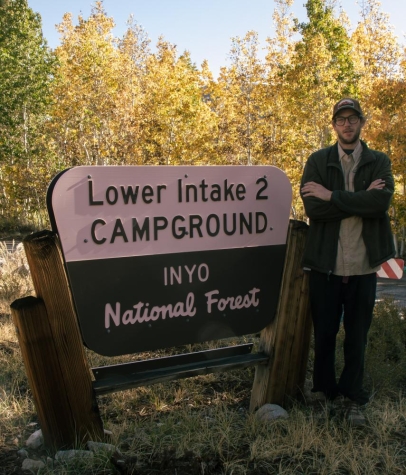
In recent years, campground hosting has become increasingly popular among younger people. As seen in the photo, the host is young and in uniform and represents this growing trend.
It’s encouraging to see the younger generation taking on these roles and helping protect the environment.
For some, campground hosting is more than a summer job. It can also provide a chance to continue education or pursue creative work while living outdoors.
For me, having a reliable internet source has allowed me to keep up with my photography and college courses while working in remote areas.
This host has worked at Intake 2 for two years. He’s known for his strong work ethic and passion for educating visitors about fire prevention and wildlife safety.
A host’ job is to maintain the grounds, monitor fire pits, and remind campers of the rules. These repeated problems show how easily carelessness can harm both the environment and the people who live and work here.
The Wildlife
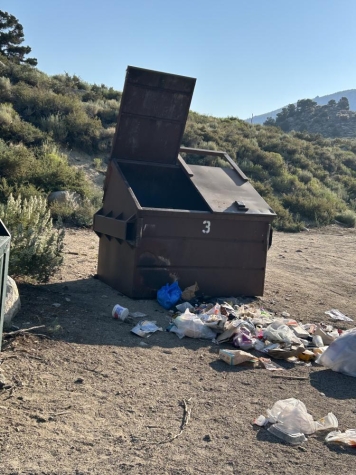
On a bright, sunny morning at Intake 2 Campground in Bishop, California, a bear dumpster was left unlatched with garbage scattered in front of it.
While throwing something away, a camper failed to fully close the lid, and a nearby bear decided it would be an easy meal. “We’ve seen trash bags ripped open and dumpsters emptied like this,” the campground Host said.
“When bears learn to get food from dumpsters, they return again and again. It changes their natural behavior and puts them and campers at greater risk of conflict.”
With more new campers visiting the Sierra each year, hosts say education is more important than ever.
Feeding wildlife even accidentally puts all animals at risk. Everything with a scent should be locked in a bear box or sealed inside a bear proof dumpster to keep wildlife safe and truly wild.
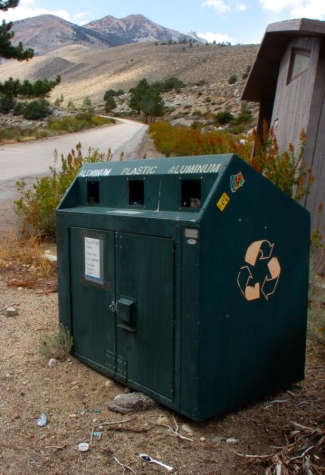
A recycle bin stands at the bottom of the campground road, often mistaken for a trash can by visitors.
This is a common issue at Intake 2 Campground, where hosts deal daily with recycling bins filled with garbage.
Campers often toss food wrappers, half-eaten meals, and plastic containers into bins meant only for bottles or cans. Once that happens, it quickly becomes a wildlife problem.
Bears are frequently seen dragging food scraps out of bins and eating anything they can find. Smaller critters like raccoons, squirrels, and birds pick through leftover trash, chewing on paper or plastic that still smells like food. Over time, this kind of behavior changes the animals. They stop foraging naturally and start depending on humans for easy meals.
“The animals will eat it, but it’s not a consistent food source,” the campground host explained.
“They keep showing up looking for it, and it messes with how they live.”
Simple mistakes like this make wildlife dependent on people and increase the risk of conflict in campgrounds. When animals become aggressive or lose their fear of humans, it’s usually the animals that pay the price either being trapped, relocated, or euthanized for behavior humans caused.
Fire Safety
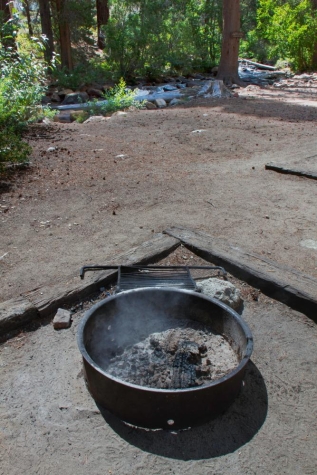
A fire pit sits beside the river at Bishop Park Campground, its ashes glowing faintly with heat. There are no visible flames, but the embers remain hot enough to ignite a wildfire at any moment.
The irony is clear: the river sits only a few feet away, easily within reach for anyone to douse the pit with water.
“People leave their fires going and they’re not there– they’ve gone home and left it burning,” the campground host said. “Even small embers can reignite and burn down the canyon.”
Fire danger is the greatest threat in the Sierra, and smoldering pits left behind are a leading cause of wildfires. Even one careless mistake can spread quickly through the dry terrain
It’s a common problem, and many campers don’t seem to realize how serious it is. People often say they hate wildfires and wish there were a way to stop them, but prevention starts with something as simple as making sure a fire is completely out.
More than half of campers leave behind pits that are still warm to the touch. There have been many wildfires started by campfires that were left unattended or not fully extinguished, proof that even a “cold” fire can still burn.
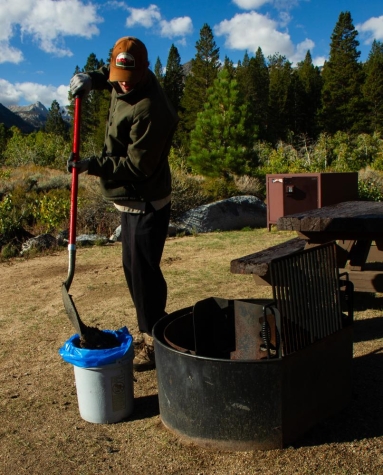
The campground host cleans out a fire pit after a camper has left. This can only be done once the fire pit is completely cool.
If someone leaves their fire burning, it delays cleanup and makes it unsafe for the next visitor. We clean the fire pits so the ashes and dirt don’t build up too high, which helps keep flames from getting out of control and starting a fire.
After finishing the pit, the host rakes around it carefully, and if needed, rakes the entire campsite. Shown here is the hard work of a campground host who takes real pride in maintaining clean, safe campsites for everyone who visits.
“More authority and stricter penalties would help,” the host said. “Right now, we don’t see enough enforcement.”
Even though campers are told to put out their fires completely, staff often find pits left hot or piled with trash. Fires that look out are still dangerous, and even one careless ember could start a wildfire.
Regular maintenance isn’t just part of the job, it’s what keeps the campground, and everyone in it, safe.
How to Put Out a Fire
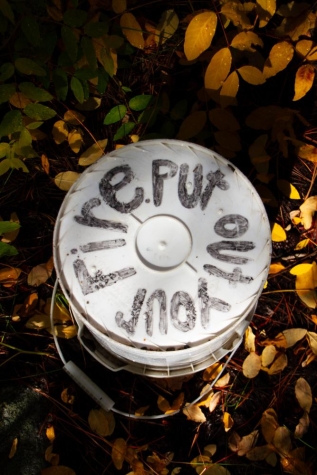
A white bucket with the words “Put Out Your Fire” painted across it sits beside a campsite at Bishop Park Campground. It’s one of many scattered throughout the area, all written by hand in permanent marker by the campground host.
These small reminders are part of his daily routine, something he hopes will make campers think twice before leaving their sites. The host said:
“We leave reminders because people still forget, even after all the warnings.”
Despite the buckets and posted signs, smoldering fire pits are found almost every day. Campers often believe their fires are out when the flames are gone, but the ashes underneath can stay hot for hours.
One gust of wind or a dry leaf landing in the pit is all it takes to spark another blaze.
The buckets might look simple, but they’re one of the host’s main tools for preventing wildfires. Each one is filled and placed near a site so visitors can easily pour water over their fires.
The message painted across them “Put Out Your Fire” is a constant reminder that responsibility doesn’t end when the camping trip does. Fire safety isn’t complicated; it just requires people to care enough to act.
Bear Boxes
A bear proof locker sits open at a campsite in Bishop Park Campground. These metal boxes are required for storing food and trash. They are designed to keep wildlife from becoming too comfortable around people. But when left open, they fail to do their job and end up putting both campers and animals at risk.
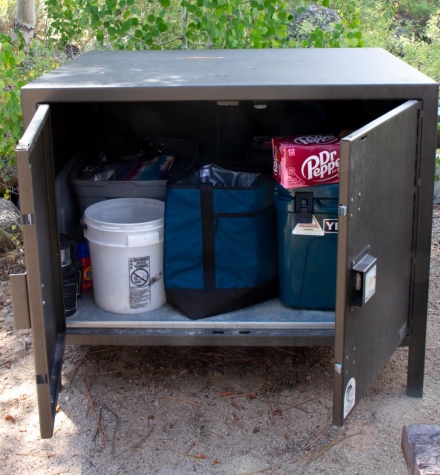
The campground host said. “When campers use the boxes, we almost never see bear problems.” Even a few minutes with the door unlatched can be enough time for a bear to learn where to find an easy meal.
Once they make that connection, they keep coming back, sometimes breaking into cars or tents looking for food.
Leaving lockers open might seem like a small mistake, but it teaches bears to rely on humans instead of their natural instincts. It changes how they behave and often leads to dangerous encounters.
When that happens, it’s not the people who pay the price, it’s the bears, who are often trapped, relocated, or killed for doing what they were trained to do by carelessness.
Micro Trash Art
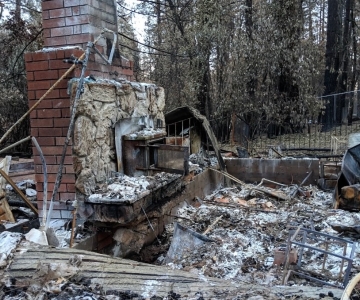
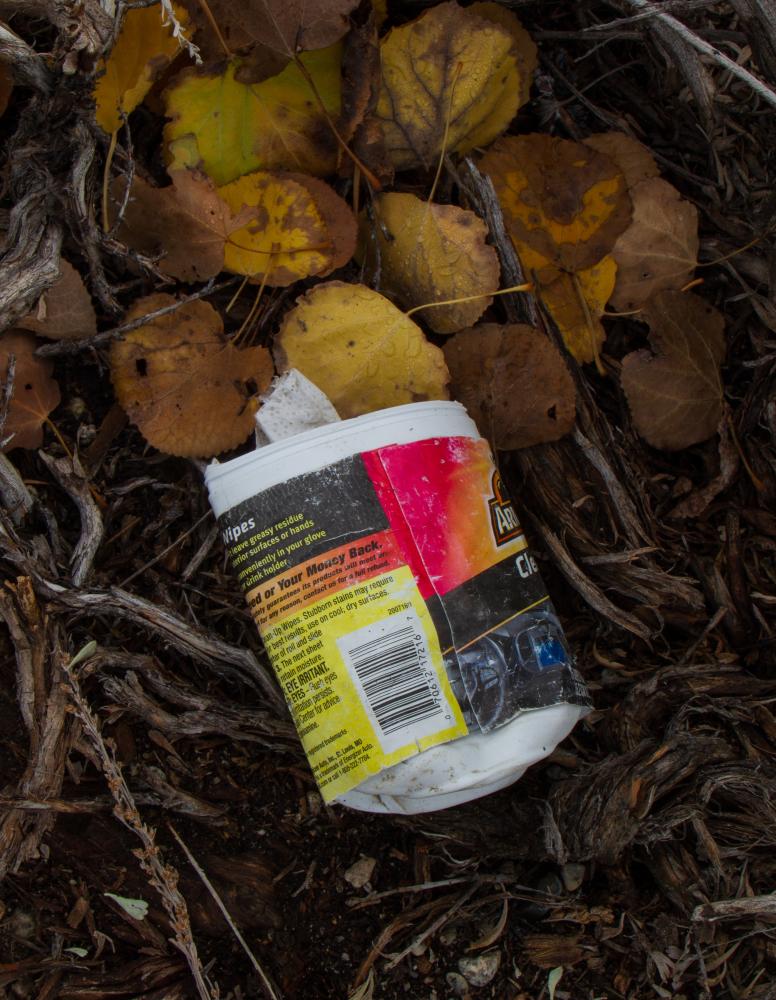
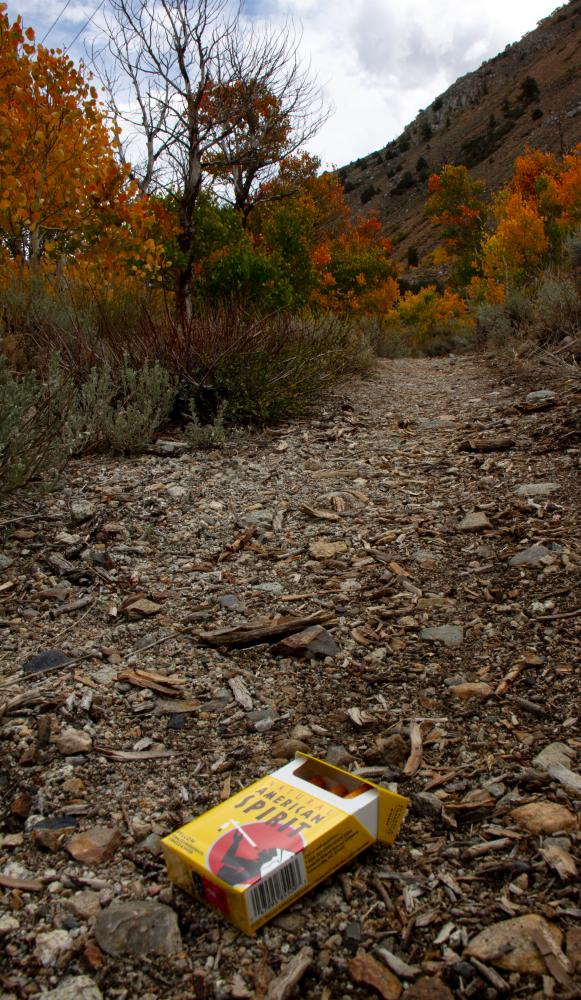
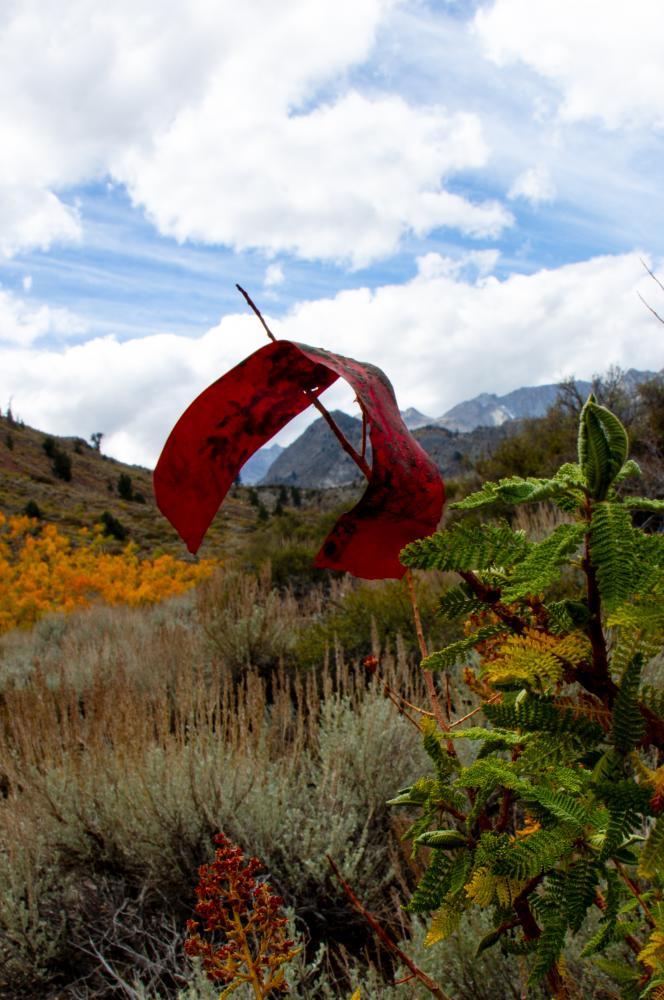
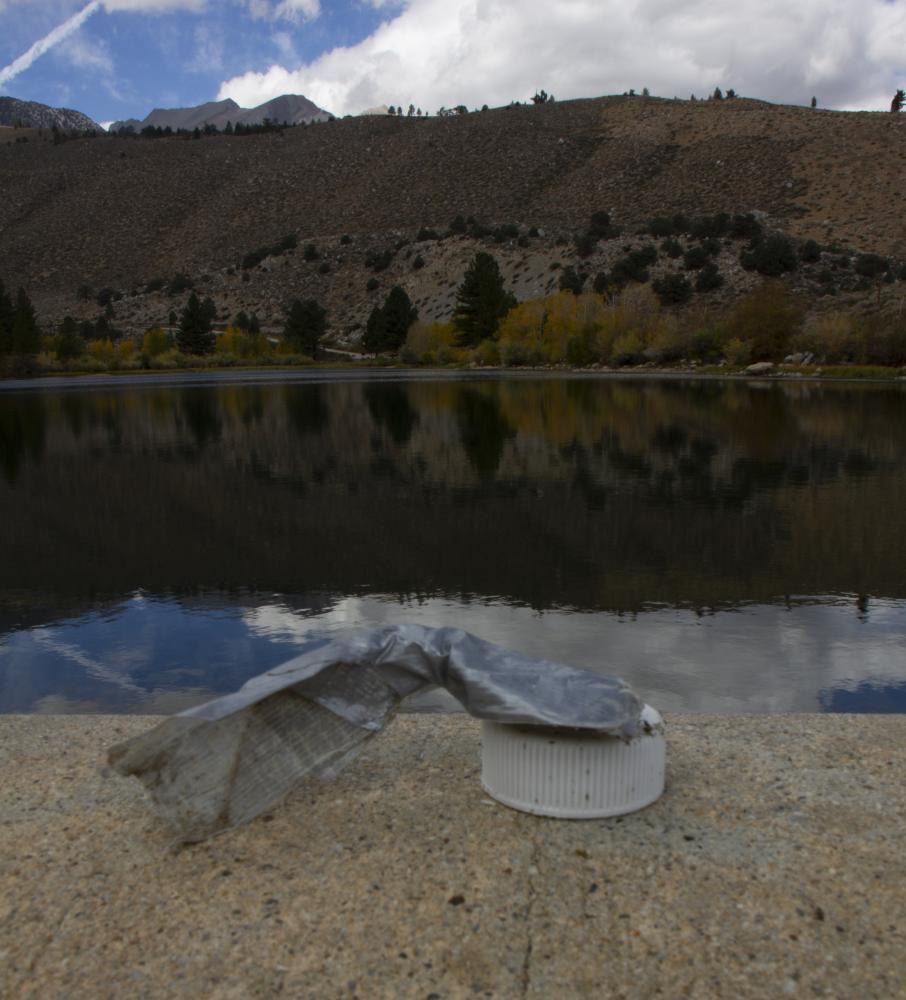
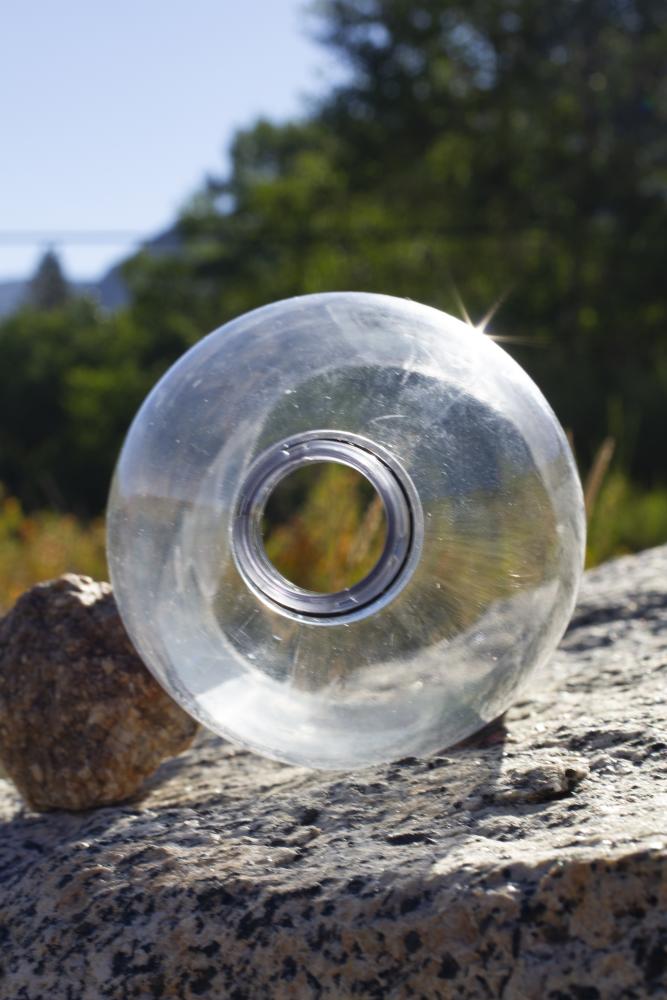
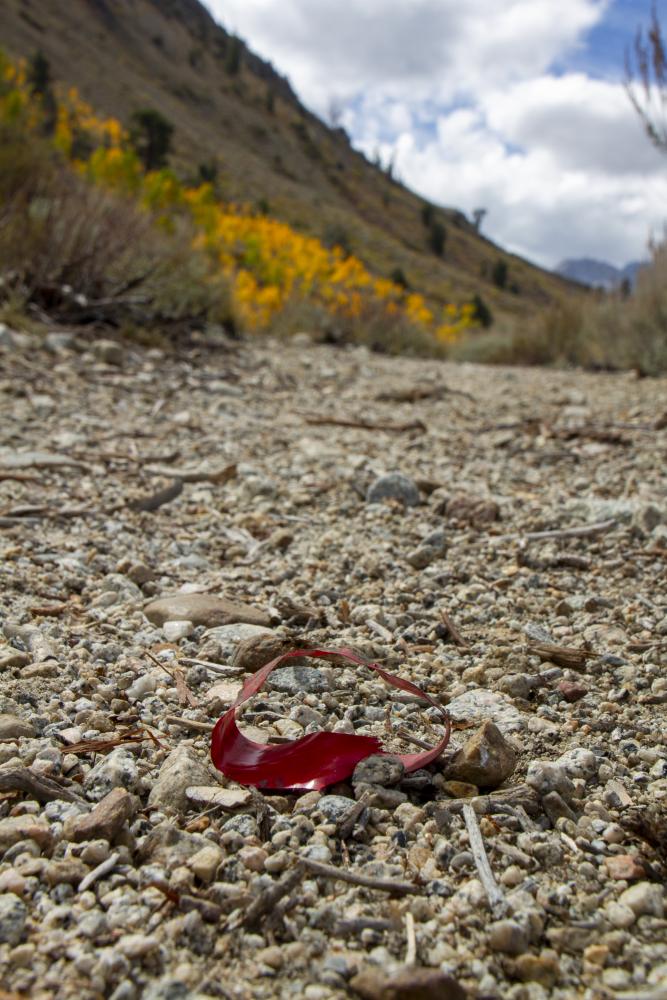
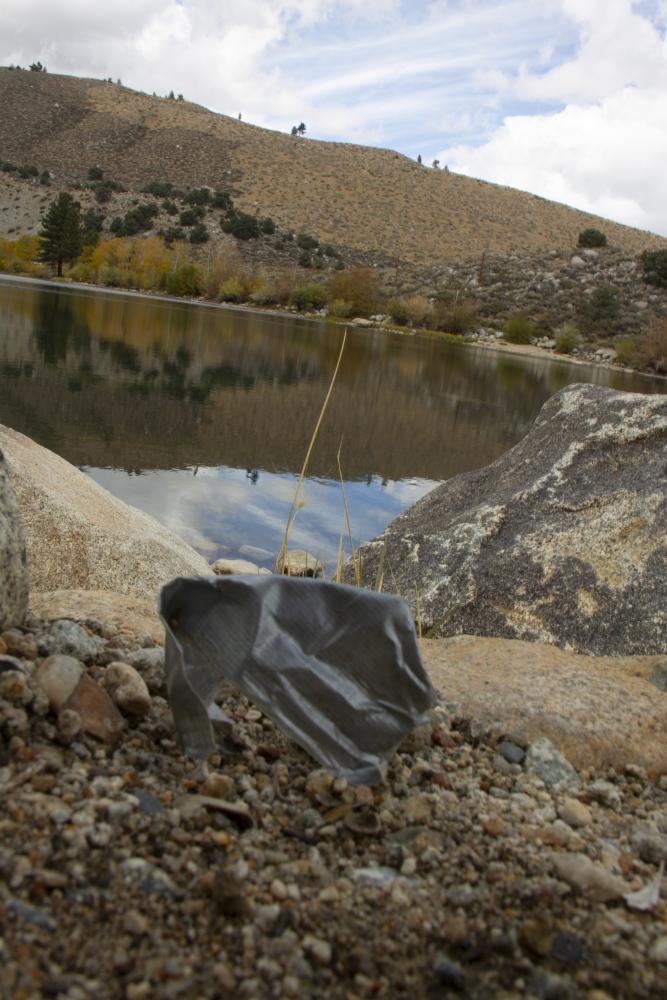
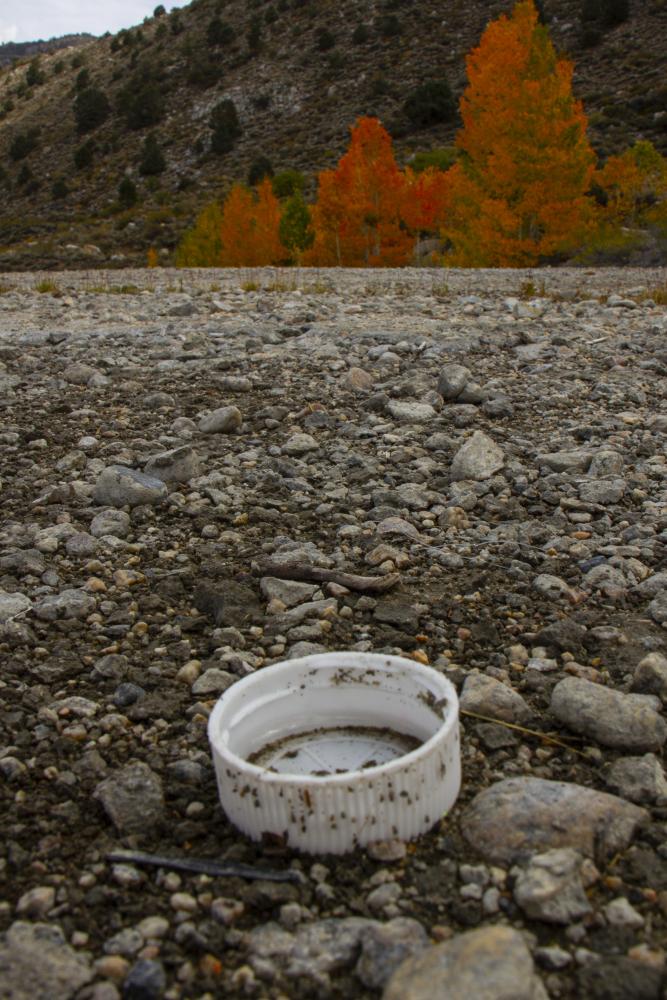
The gallery of images at the top of this story depict campground trash. One shows a piece of red tape hanging on a branch, captured as found art, and thrown away safely after my photo-shoot.
Microtrash is all the small stuff people leave behind: tiny bits of plastic, foil, paper, and wrappers that scatter around campsites.
It’s what’s left when a trash bag rips, when someone burns garbage in the fire pit, or when the wind blows debris out of a can. It might not look like much, but it adds up fast.
Camp hosts spend hours picking it up, bending over to grab pieces smaller than a coin. It hides in the dirt, around tables, and along the riverbanks. Over time, it breaks down and spreads everywhere, becoming part of the land itself.
Every piece of trash, every open locker, every fire left burning tells the same story. It’s not nature that’s careless, it’s us.
The campground hosts do what they can, but real change happens when people start to care enough to act. Protecting these places isn’t complicated; it’s about paying attention, doing the small things, and leaving the land better than we found it. As one host put it:
“Leave your campsite better than the way you found it.”
It’s a simple reminder, but maybe that’s all it takes to keep these wild places safe.
Photographed, Reported, and Written by Madison Bauer