Tariffs can be very worrisome for small business owners. Without hard numbers, it has made buying very chaotic due to the uncertainty about what the cost of the tariff will be once items come to port.
I spoke with partial owner of Milo Auburn Snow and Skate, Jason Watson, over the phone on September 10, 2025. We talked about the issue and what he has noticed as well as dealt with so far. Watson said:
“It’s been a wild ride of not knowing how much they’re gonna be, not knowing how much the companies gonna absorb that tariff, and how much is gonna be passed to us.”
There are different ways to tackle these tariffs when buying. Those at Milo have slowed down their purchases, focusing on only the essential items and quantities in hopes to minimize the effects. However, without a clear answer for these tariffs, businesses are being forced to roll with the punches for as long as they last.

Watson explained that although the tax will never go away exactly, it will eventually decrease because there will be a point when “people can’t afford you know to pay higher prices on the scale that that’s happening.”
For now, as they are still very much in place, Watson hopes that the purchasing of disposable clothing and goods will be put to a halt.
Companies such as Amazon, who sell a lot of cheap items from overseas, will be forced to raise their prices and it will be hard for them to make a profit. He said, “[I hope there’s] a silver lining with people actually buying stuff that is made well and will last, rather than people just buying garbage.”
Tariffs Impact on Buyers
Tariffs are an imposed tax by the government on imported goods. These taxes are charged to buyers and businesses who are then forced to pass this cost on to the consumer.
Because of this cost increase, businesses have to adjust by purchasing fewer products, raising prices, and in some cases “covering” the tariff cost themselves. As a result, many manufacturers have reduced the number of products produced due to the fact that people are unable to afford or unwilling to pay the higher prices.

To find out more on how the younger generation is being affected by these tariffs, I reached out to Sierra College student Meadow Dettner. We spoke over the phone on November 15, 2025.
Dettner told me that she has heard about the tariffs on the news and has noticed a large price increase in her shopping. A standout for her was the globally popular online shopping website, Amazon.
“Some items that I’ve noticed a big price change on while buying them are like basic Amazon tank tops and clothing from online sites,” Dettner said. Amazon’s prices have risen around 12.8%, much higher than other popular franchises such as Walmart and Target who have only increased prices by around 5%.
This has forced many to change their purchasing habits. For Dettner, the best option has been trying to “…thrift more often than I used to or go to stores that are known for having lower prices.” She is not the only one who has used this strategy, a recent survey has shown that around 34% of second hand shoppers said they have joined the wave due to new tariffs.
When it comes to the knowledge on tariffs, Dettner noticed that although many have heard of them, a large group of people do not fully understand their impact. “I feel like most students have heard the term and know somewhat what they are. But I don’t think everyone knows the effects of them or why they are now raining prices on things,” Dettner said.
Tariffs Under Trump
During Trump’s presidency, the tariffs on imported goods have increased to the highest rate since 1935, the year of the Smoot-Hawley Tariff Act, which worsened the Great Depression by taxing over 20,000 imports.
The average US tariff has increased from 2.5% to 18%, with even higher rates for certain countries. China, the world’s largest manufacturer, faced potential tariffs over 100%, which could be devastating for the global economy.
Some of these new Tariffs put in place have been ruled illegal, striking many problems, and the legality of the tariffs are currently pending.
Effects on Restaurants
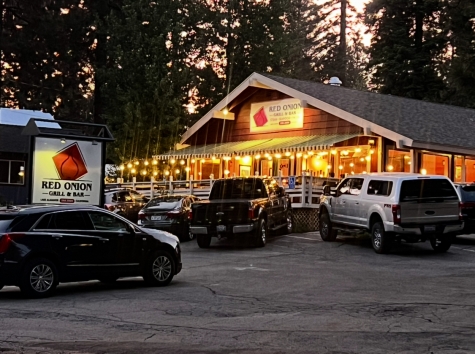
Due to the tariffs increasing the costs of imported goods, businesses like Milo Snow and Skate are not the only ones feeling the impact. Tariffs on food products have made new challenges for restaurants as well, forcing higher prices and making owners plan more for the future.
I spoke to Filip Laboda, owner of the Red Onion Grill in Lake Almanor, California to get a better look at how these restaurants have tackled problems. We spoke over the phone on November 17, 2025.
For those at the Red Onion Grill, the items that were affected the most were vegetables such as avocados, tomatoes, and lettuce from Mexico; pastas and cheeses from Italy; and Liquors from Mexico and Canada. The Canada-United States-Mexico Agreement had set up free trade between the countries; however, due to tensions, Trump imposed a 25% tariff on the goods.
The idea of these tariffs being able to change at any time has made it nearly impossible for the Red Onion Grill to organize in advance. Despite purchasing ahead on a little extra expensive tequila, there was not much they could do. Laboda said:
“The tariff rates are changing all the time, making the whole situation unpredictable.”
Laboda explained that he could not easily substitute or change portion size, so they were forced to increase pricing across the board. Although the boost in pricing is unfortunate, Laboda said, “…there was no negative feedback, all customers understood the need for price increases.”
At this point in time, most expect a higher price when eating out, whether or not they know why. Most restaurants have increased their prices, and in order to keep a profit, they would need to do so by 30% from what they were in 2019.
The Bigger Picture

For most consumers, a long term look at these tariffs would mean dialing back on purchases. This doesn’t mean changing your lifestyle, but rather becoming more strategic.
Ultimately, for people and businesses, the tariffs sum up to money at the end of the month, influencing what’s affordable, what’s essential, and what can wait.
Until the tariffs change, the best approach is to stay smart and focus on value over volume, while businesses go through these setbacks. These large tariffs will not be in place forever, but as for now, we will just have to continue to adapt.
Reported and Written by Hunter Hodson