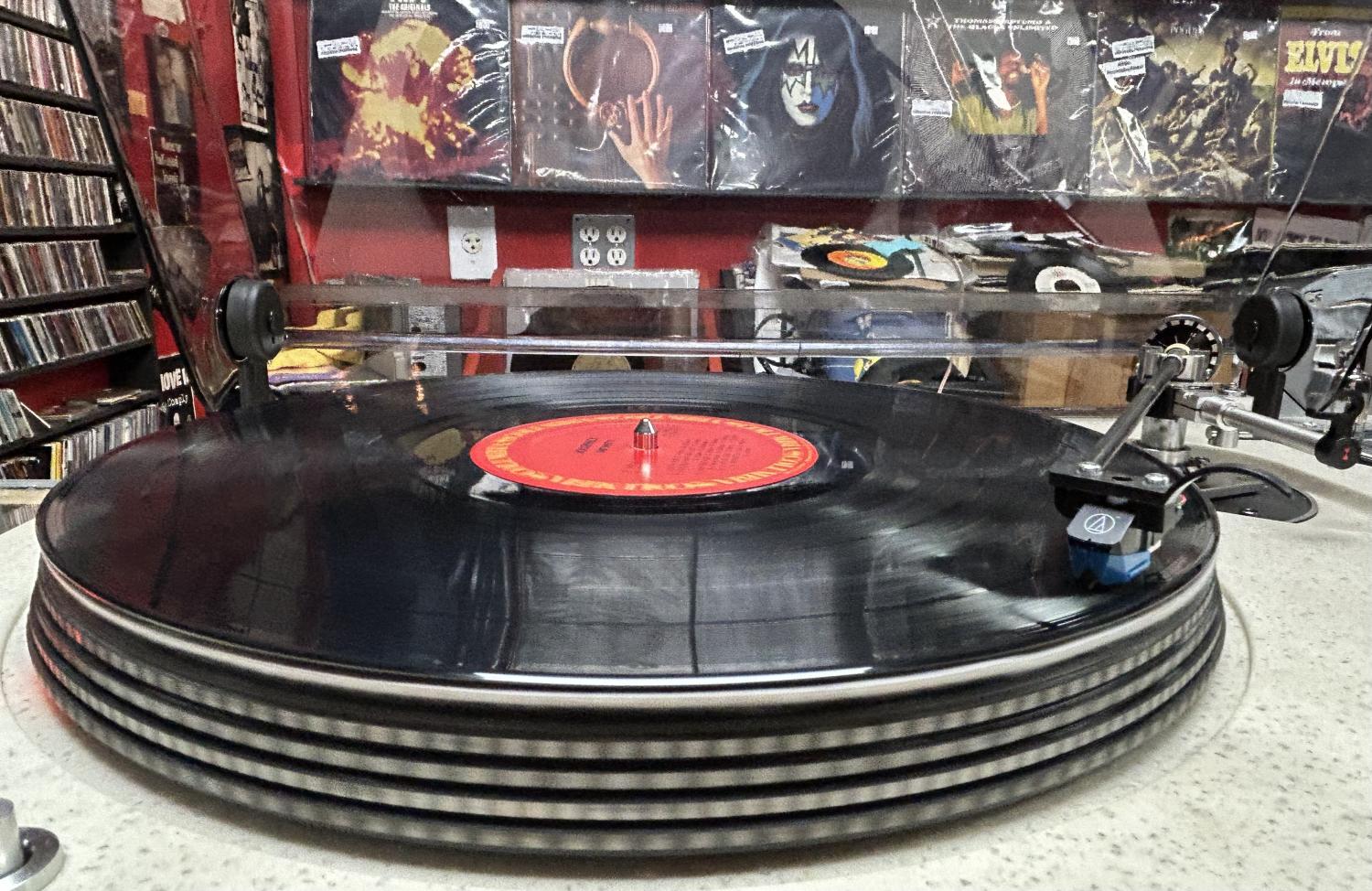
Record, album, LP, vinyl. These round discs, the size of a pizza, were how your grandparents listened to their favorite bands. At this time, when digital is so available, why do people still listen to music on a “turntable”?
Starting in 1898, the first records were made on flat discs, coated with shellac.
They spun on a turning “table,” which had a needle that picked up sound etched into the grooves of the disc. To this day, they are called 78s, because they play at a speed of 78 revolutions per minute or rpm. Small records are called 45s, because they spin at 45 rpm.
The Birth of Vinyl
During World War II, shellac was less available so vinyl came into use. As a result some 78 rpm “records” were pressed in vinyl, especially the six-minute 78 rpm records produced for US troops. Fast forward to 2025, and vinyl records are still being pressed today.
The grooves on each side of a record album are one continuous track, which adds to the difference in quality between this medium and streaming music.
I visited a few local record stores to find out why vinyl records are still popular. And search for a rare Frank Zappa album on my sister’s birthday wish list.
The Audio Nerd
The Audio Nerd record store is full of rare finds for the music lover who appreciates the exceptional quality that analog provides. Analog is a method of capturing and storing sound, considered to be superior to digital recordings by many.
Owner Steve Holt started the company online in 2005, mostly selling audio gear. “Then in March of 2015 we bought out The Beat, a pretty famous record store in downtown Sacramento that closed its doors after 33 years,“ he said in a phone interview on Aug 31, 2025.
He scored 250,000 pieces of media including vinyl, cds, dvds and cassettes, and opened his current storefront on the corner of Pacific Street and Midas Ave., just two miles from the main Sierra College campus. Thus, ten years ago, The Audio Nerd was born.
Listening to Digital and Analog
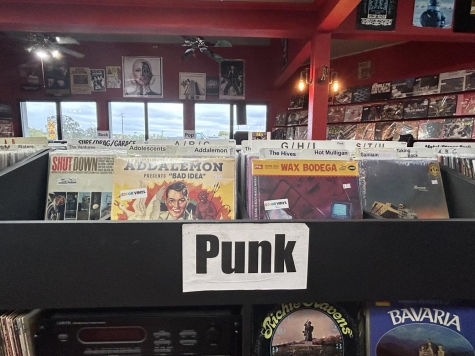
I asked Steve why some people prefer vinyl or tape to the digital music most access online. He said:
“Digital audio is only a sampling of the analog frequency …so it’s almost like if you’re reading a paragraph and someone removed every fourth letter from every word.”
He continued, “You’d still be able to read it and comprehend it– but it would just become fatiguing and weird to read an entire novel that way. You’re only seeing part of the story.”
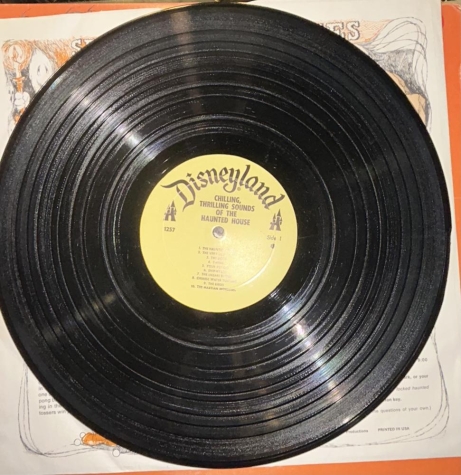
In other words, live music lets us hear a full, rich, complete sound wave. When these sound waves are recorded directly onto a record itself, although not as perfectly as live sound, the result is pretty real. This recorded medium is called “analog.”
In comparison, digital is a compressed, processed and fractured interpretation of that analog, that while easy to access, is the lowest quality form of audio. The detail and nuance is lost once digitized. For some music lovers the “high fidelity” they find using vinyl is a listening game changer.
I interviewed Cameron, who works behind the counter at Audio Nerd in September 2025. He explained his perspective on the difference between the audio forms of analog: tape and vinyl record album, or digital: CDs, DVDs, or audio streaming services:
“It’s like if you put a pen to paper… and drew a consistent line, as opposed to taking a pen and creating lots of dots…which are not connected smoothly.”
He continued, “This is the description I like that best describes why the digital sounds we listen to are not as good quality as analog.”
While the classic punk band The Sex Pistols blared through the speakers, a very elderly gentleman walked in with “An American in Paris,” album, circa 1952, tucked carefully under his arm.
When I moved out of his way, I knocked over a small bowl of yellow plastic 45” inserts. These brought me back to memories of the very first small records I bought as a child, at the famous Tower Records on Watt avenue.
Once Upon a Tower Records Time
The history of vinyl in Sacramento starts with the iconic Tower Records, one of the most successful long standing record stores in US history.
In 1960, Russell Solomon opened the first Tower Records store in downtown Sacramento. He named it after his father’s drugstore, which shared a building and name with Tower Theatre, where Solomon first started selling records. To this day the ornate theater still plays foreign and indie films.
The first stand-alone Tower Records store was located at 2514 Watt Ave in Sacramento, where me and my friends bought black light posters and our first albums. Outside on the sidewalk in front of the store, a guy would sell 8×10 photographs of all the bands that would come through town. These precious photos were the next best thing to actually going to the concert.
I bought my first album there, Led Zeppelin’s “Houses of the Holy.” My sister Gretchen’s first album was Black Sabbath’s “Paranoid.” We would listen to them for hours after school, and on the weekends, while playing pool in my father’s den.
In the 1960s, my oldest sister Cindy visited the listening booth at both stores. Here’s her memory, starting with her first album, shared with me in an interview on September 18, 2025.
Although Tower Records expanded in the 1970s to several US and international locations, the business shut down in 2006. Lucky for us collectors, small local record stores continue to spring up.
Audio Nerd has a great music selection, but I didn’t find the record I was looking for. So I headed up Highway 49 to see what vinyl treasures the foothills might hold.
Fresh Picks at Cherry Records
There are lots of small record stores tucked away, like Cherry Records in Auburn, Calif. I interviewed former KVMR DJ and owner of Cherry Records, Al Lauer on Oct. 20th in his store. He said vinyl is making a comeback among young people,”Probably 80% of my buyers are 15-30 years old.” Listen to our chat here:
Further up the road, near the Sierra College campus in Grass Valley, you can find stacks of vintage and newly pressed vinyl at Clock Tower Records. And for live music, vinyl and an occasional mosh, check out Sans Backup Plan Records in Nevada City.
Sans Backup Plan & Real Records
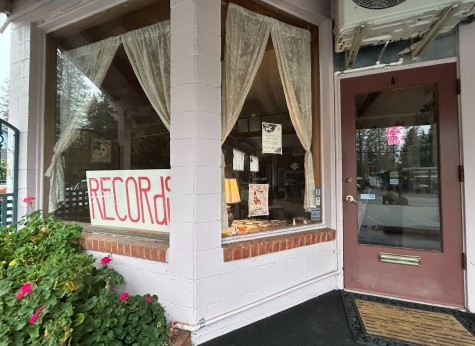
Owner Amelia Arellanes creates a welcoming space where eclectic local bands play live concerts and local artists display their latest creations.
Amelia is all about community and “…providing affordable, hard-to-find music,” she said in an interview at her store on October 28th. She said:
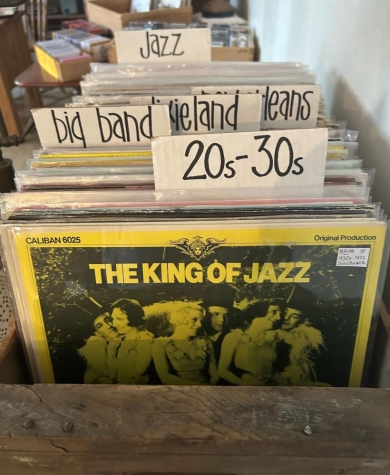
“It’s so much nicer to get your music physically, and buy your music in an organic way.”
She laments that Spotify, “…only feeds you these two songs that everyone else listens to.” She also shared the significance of being one of the few woman owned record stores.
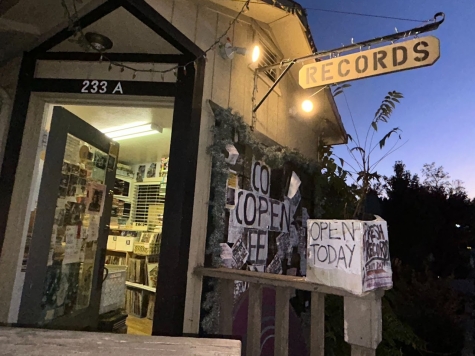
My last stop on my search for local vinyl was Real Records in Grass Valley. The shop sells rare albums and other fun collectibles. Further down the street, Booktown, also offers hundreds of records to select from.
When you have some time between classes, check out a record store and discover what the fuss is all about! You just might walk away with a rare copy of your grandma’s first concert, and open up a whole new world of good quality media you never knew you were missing.
Reported, Photographed, and Written by Heidi Starr